The Importance of Katas in Martial Arts
The Importance of Katas in Martial Arts
“If you want to understand today, you must search yesterday.”
That old saying hits especially hard in martial arts.
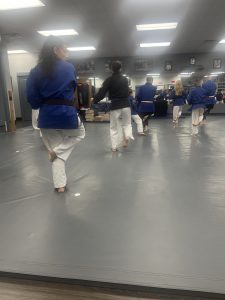
Kata is often the first thing students want to rush past. It looks slow. Repetitive. Too formal. And in a world obsessed with speed and instant feedback, it can feel outdated. But here’s the truth most people miss: kata is not the past of martial arts—it’s the operating system. Strip it away, and what you’re left with is motion without meaning, effort without structure, and technique without discipline.
I’ve watched students plateau for years because they treated kata like choreography. And I’ve watched others quietly surpass their peers because they committed to kata as a daily practice. Not flashy. Not rushed. Just consistent. That’s where real discipline is built.
Kata isn’t about memorizing movements. It’s about training the mind and body to think clearly under pressure.
Kata Is Where Discipline Is Forged
Discipline doesn’t come from motivation. It comes from repetition done correctly, especially on days when you don’t feel like showing up. Kata demands that kind of honesty. There’s no opponent to blame. No distraction to hide behind. Every mistake belongs to you.
When a student practices kata regularly, they are training more than technique. They are training attention. Breath control. Balance. Timing. Posture. All of these are invisible skills until they’re missing—and kata exposes that rapidly.
Here’s something most people don’t realize: elite performers across fields rely on structured repetition. Musicians rehearse scales. Athletes drill fundamentals. Pilots run checklists. Kata is the martial artist’s version of that process. It’s where discipline becomes a habit instead of an idea.
And habits, not talent, are what win.
Kata Teaches You How to Learn
One of the greatest gifts kata offers is feedback—if you know how to listen. Every repetition asks quiet questions: Was your stance stable? Did your technique finish with intent? Was your transition efficient or sloppy?
Students who rush kata miss those questions entirely. Students who slow down begin to hear them. This is where growth accelerates.
A practical shift I encourage is this: stop counting repetitions and start assigning intention. Pick one technical focus per session. Maybe it’s hip rotation, breath timing, or visual focus. Run the kata with that single lens. That’s not busywork—that’s deliberate practice, and it sharpens discipline faster than mindless reps ever will.
Kata teaches you how to improve, not just what to practice.
Pressure Reveals What Kata Builds
Under stress, the body defaults to what it knows best. That’s not theory—it’s physiology. When adrenaline spikes, fine motor skills are lost, and decision-making narrows. What remains are ingrained patterns.
This is why kata matters.
A student who has internalized kata doesn’t freeze when things go wrong. Their body already knows how to move, breathing already knows how to settle, and their mind already understands sequence and structure. That level of preparedness doesn’t come from sparring alone. It comes from disciplined, intentional kata practice that is layered over time.
Discipline shows up when chaos hits. Kata prepares you for that moment long before it arrives.
Kata Is a Leadership Skill in Disguise
This may surprise some, Kata develops leadership traits more than almost any other practice in martial arts. Why? Because it requires self-governance. No one can do it for you. No one can fake it convincingly for long.
Students who commit to Kata develop patience. They learn to self-correct. They become comfortable with delayed results. These are leadership traits, not just martial ones.
I often tell advanced students this: the way you train Kata is the way you live. Rushed practice produces shallow results. Consistent, thoughtful effort builds depth. That connection between behavior and outcome is the heart of discipline—and it transfers far beyond the mat.
Making Kata Relevant Again
If kata feels stale, the problem isn’t the Kata—it’s the approach. Bring relevance back by asking better questions. What does this movement protect? What does this stance teach about stability? Where does this technique fail if done incorrectly?
Pair kata with application, and reflect. Write down one insight per session. These small habits compound quickly.
Kata isn’t meant to replace live training. It’s supposed to support it. When the two work together, progress becomes inevitable.
Why Kata Still Matters
Martial arts without kata eventually lose their roots. Martial artists without kata often lose their way. The practice teaches more than movement—it teaches mindset. It teaches patience, self-respect, and discipline in its purest form.
And in a noisy world chasing shortcuts, that might be exactly why kata matters more now than ever.
If you want speed, train combinations.
If you want power, train conditioning.
But if you want longevity, clarity, and true mastery—train kata.
Every day. On purpose. With discipline.
Click here for more:
Belt Goals vs. Skill Goals: Why You Need Both

- Crabapplemartialarts.com and Crabapple Martial Arts Academy has been selected the nation’s #1 martial arts schools for SIX YEARS IN A ROW by the American Budokai International!
Founded in 2013 by Mr. C. Matthew White is a 5th-degree Black Belt in Karate and 6th-degree Black Belt in Jiu Jitsu, and Master Instructor. Crabapple Martial Arts Academy offers Karate lessons for kids ages 4 and up. These classes are designed to develop the critical building blocks kids need – specialized for each age group – for school excellence and later success in life.
Crabapple Martial Arts Adult Karate training is a complete adult fitness and conditioning program. This is for adults who want to lose weight, get (and stay) in shape, or learn self-defense in a supportive environment.
Instructors can answer any questions or be contacted 24 hours a day, 7 days a week at of****@******************ts.com or call directly at 770-645-0930. You can also visit our website at CrabappleMartialArts.com.
About C. Matthew White, Shihan: Matt is a fifth-degree black belt in traditional Japanese and Okinawan Martial Arts – Shuri Ryu Karatedo. He is also a sixth-degree black belt in Japanese Jiu Jitsu – Shintoyoshin Kai Jiu Jitsu. He is a master instructor with the title of Shihan, which by definition means teacher of teachers in Japanese. Matt has a bachelor’s degree in Exercise and Sports Physiology. He has been training and teaching martial arts for over 27 years. He has owned Crabapple Martial Arts Academy since 2013. Shihan White is a motivational speaker and educator, who teaches seminars in bullying, business, and martial arts training.
Crabapple Martial Arts Academy Headquarters is in Alpharetta, Georgia at 12315 Crabapple Road., Suite 124, Alpharetta GA 30004. You can locate the Chief Instructor, Sensei Robert Reed there or directly at (770) 645-0930.